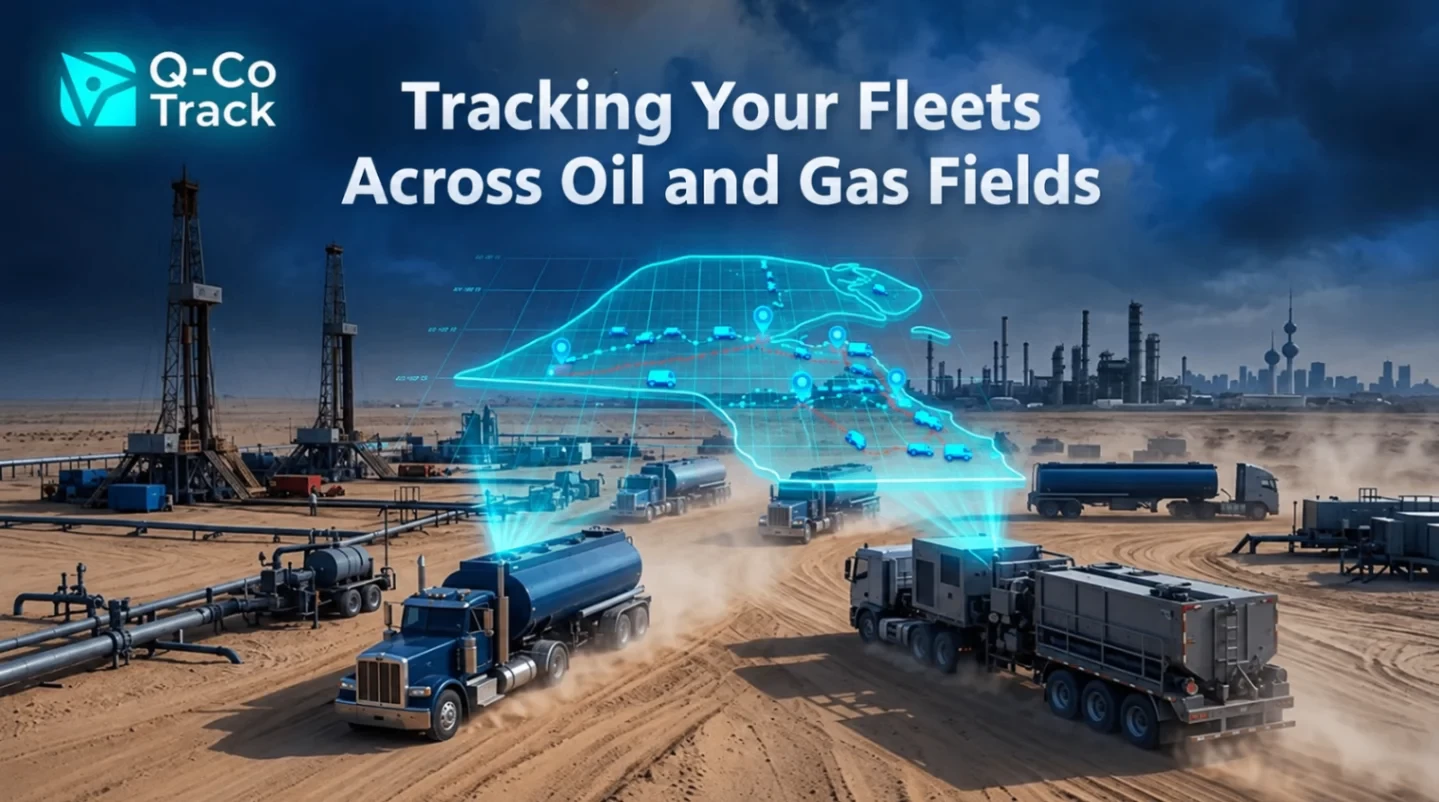
Tracking oil and gas fleets
leet management has become an essential part of daily operations for oil and gas companies in Kuwait. These businesses often rely on dozens or even hundreds of vehicles to transport employees, equipment, and operational materials between oil fields, remote sites, warehouses, and operating facilities. Because many of these vehicles operate across remote and desert areas, having real-time visibility over the fleet is critical. Vehicle tracking for oil and gas companies using GPS tracking systems can help improve operational control, enhance driver safety, monitor vehicle movement, and reduce unnecessary operating costs. Modern GPS tracking solutions go beyond simply showing a vehicle’s location. They provide businesses with operational data, alerts, and reports that support better fleet management and more informed decisions.
Why Do Oil and Gas Companies Need Vehicle Tracking Systems?
Oil and gas operations have unique fleet management requirements. Vehicles may constantly travel between oil fields, industrial sites, warehouses, and operational facilities, often covering long distances in remote areas.
For this reason, fleet managers need reliable visibility over their vehicles and drivers. A modern GPS tracking system can help companies:
- Monitor vehicle movement in real time.
- Know the location of every vehicle during a trip.
- Improve response times during emergencies.
- Increase fleet operating efficiency.
- Record trips, routes, and stops.
- Improve vehicle allocation across different work sites.
- Monitor driver speed and driving behavior.
- Provide accurate data for operational decisions.
These capabilities become increasingly valuable as fleet size and the number of operating locations grow.
Key Fleet Management Challenges in the Oil and Gas Sector
Oil and gas companies face several challenges that can affect safety, productivity, and operating costs.
Tracking Vehicles in Remote Locations
Many vehicles operate in oil fields, industrial areas, and remote desert locations. Knowing the exact location and movement of each vehicle gives fleet managers better operational visibility.
High Fuel Consumption
Fuel is one of the major operating expenses for fleet-based businesses. Long routes, unnecessary idling, inefficient driving, and unauthorized vehicle use can all contribute to higher fuel consumption.
Unauthorized Vehicle Use
Vehicles used outside approved working hours or designated routes can increase operating expenses and create additional safety and security risks.
Monitoring Driver Behavior
Speeding, harsh acceleration, sudden braking, and unnecessary stops can affect driver safety, increase fuel consumption, and contribute to higher maintenance costs.
Limited Operational Visibility
Without real-time fleet data, management may struggle to evaluate vehicle performance, identify inefficiencies, and make accurate operational decisions.
How GPS Tracking Helps Track Oil and Gas Fleet Vehicles
Modern GPS tracking systems provide more than location data. They can become part of an integrated fleet management solution that helps companies monitor operations and analyze fleet performance.
Real-Time Vehicle Tracking
GPS tracking allows fleet managers to view vehicle locations on a live map and monitor movements while vehicles are performing their operational tasks.
Driver Behavior Monitoring
Tracking systems can record driving indicators such as speed, harsh acceleration, sudden braking, and stops. This data can help companies improve driver behavior and enhance road safety.
Route and Geofencing Management
Companies can define approved routes and geographic zones for their vehicles. Alerts can then notify managers when a vehicle leaves a designated area or deviates from an approved route.
Real-Time Alerts
Smart alerts can notify fleet managers about important events such as speeding, entering or leaving a designated area, or vehicle operation outside approved working hours.
Fleet Reports and Analytics
Detailed reports can provide information about trips, distances, operating hours, stops, and driver performance. Management can use these insights to identify inefficiencies and improve fleet operations.
How Oil and Gas Fleet Tracking Can Reduce Operating Costs
Oil and gas companies need to control operating expenses without compromising operational efficiency.
GPS fleet tracking can help identify sources of waste by analyzing routes, idle time, driving behavior, and vehicle usage. Companies can also use fuel-related data to identify inefficient driving patterns and vehicles that require closer monitoring.
For more information about reducing fleet expenses, businesses can also explore our guide on reducing fleet operating costs in Kuwait.
The Importance of Safety for Oil and Gas Fleets
Safety is one of the highest priorities in the oil and gas industry, particularly when vehicles operate in remote locations or transport employees and equipment between operational sites.
GPS tracking can improve fleet visibility, monitor driving behavior, provide alerts for certain events, and help management identify the location of a vehicle when assistance or intervention is required.
Combining vehicle tracking with driver safety policies and fleet management procedures can create a more organized operating environment and help reduce fleet-related risks.
What Fleet Data Can Companies Monitor?
A modern GPS tracking and fleet management platform can provide valuable operational information, including:
- Current vehicle location.
- Trip and route history.
- Distance traveled.
- Operating and idle time.
- Vehicle speed and driving behavior.
- Fuel consumption.
- Geofence violations.
- Vehicle use outside working hours.
- Operational and performance reports.
This means tracking data can become more than simple location information. It can support decisions related to fleet efficiency, safety, operating costs, and resource allocation.
Do You Manage an Oil and Gas Fleet?
If your company relies on a fleet of vehicles to transport employees, equipment, or perform field operations, having a reliable vehicle monitoring system can give management greater visibility over daily operations.
QCO Track provides companies in Kuwait with solutions for real-time vehicle tracking, fleet data analysis, driver behavior monitoring, alerts, and operational reporting through a centralized platform.
Discover how GPS fleet tracking can help improve operational efficiency, reduce waste, and give your company greater visibility over vehicle movements.
Why Choose QCO Track for Oil and Gas Fleet Management?
QCO Track provides vehicle tracking and fleet management solutions that can be adapted to different fleet sizes and operational requirements.
Key capabilities include:
- Real-time vehicle tracking.
- Driver behavior monitoring.
- Operational and analytical reports.
- Instant alerts.
- Geofencing.
- Route and trip monitoring.
- Fuel consumption monitoring.
- Scalable fleet management solutions.
- Technical support for businesses.
Frequently Asked Questions
Do oil and gas companies need GPS tracking for all their vehicles?
It depends on the company’s fleet structure and operational requirements. However, GPS tracking can provide significant value for businesses managing multiple vehicles by improving visibility, safety, and operational control.
Can GPS tracking monitor vehicles operating in oil fields?
Yes. GPS tracking systems can monitor vehicle locations and routes and provide reports and alerts through a centralized platform, depending on the system capabilities and network coverage available at the operating site.
How does GPS tracking help reduce fuel consumption?
Tracking systems can analyze routes, driver behavior, idle time, and vehicle usage. This allows fleet managers to identify fuel waste and improve driving and operational efficiency.
Are QCO Track solutions suitable for large fleets?
Yes. Fleet tracking and management solutions can support both small and large fleets, allowing businesses to monitor vehicles through a centralized platform according to their operational requirements.
Improve Your Oil and Gas Fleet Management Today
Fleet management for oil and gas companies no longer needs to rely solely on manual monitoring. With vehicle tracking for oil and gas companies, businesses can gain better visibility into vehicle movements, improve safety, monitor performance, and reduce unnecessary operating costs.
If you manage an oil and gas fleet in Kuwait, contact QCO Track to discover the tracking and fleet management solution that best fits your business needs.